Welcome to Erica Cavaliers! I’m Erica, and together with my husband, we’ve been passionate Cavalier King Charles Spaniel breeders for over 10 years. Our journey began as we prepared for retirement, choosing to dedicate our time to something truly meaningful. Having grown up with Cavaliers, I’ve always cherished their gentle nature, affectionate personalities, and soulful eyes. These dogs are more than pets—they’re family. At Erica Cavaliers, we are committed to raising healthy, happy puppies in our home—not in kennels—where they receive daily socialization, love, and care. We focus on excellent health, temperament, and the classic Cavalier charm, whether your puppy becomes a family companion, therapy dog, or show partner. We follow ethical breeding practices and health standards supported by the American Kennel Club and CKCSC USA. When you adopt from Erica Cavaliers, you’re not just getting a puppy—you’re joining a lifelong community that offers continued support, guidance, and love. Explore our available puppies or contact us to learn more about bringing home your perfect Cavalier King Charles Spaniel.
As a dedicated Cavalier King Charles Spaniel breeder, I proudly follow The Kennel Club’s Breed Standards, which outline the ideal appearance and  temperament of this beloved breed. While these standards serve as a valuable guide, it’s important to recognize that Cavalier King Charles Spaniels—like all dogs—possess unique charm and personality that no guideline can fully define. At Erica Cavaliers, our puppies are never raised in kennels; instead, they grow up in our loving home where they receive daily affection, play, and social interaction. We are deeply committed to breeding healthy, well-tempered Cavaliers, whether you’re seeking a loyal family companion, a future therapy dog, or a show-quality puppy. As a trusted Cavalier King Charles Spaniel breeder, we prioritize not only health and temperament, but also lifelong support for our families. When you choose Erica Cavaliers, you’re not just bringing home a puppy—you’re becoming part of a caring community. 🐾 Thank you for considering Erica Cavaliers as your Cavalier King Charles Spaniel breeder. We look forward to helping you find your perfect companion.

According to The Kennel Club’s Breed Standard, the Cavalier King Charles Spaniel should be an active, graceful small dog with a gentle expression. True to their reputation, Cavaliers are affectionate, friendly, and eager to please. Their coat should be long, silky, and free from curl, adding to their elegant appearance. Ideal adult weight ranges from 5.4 to 8.2 kg (12 to 18 lbs). You can read the full Kennel Club Cavalier King Charles Spaniel Breed Standard here.
While this description reflects the ideal outlined by The Kennel Club, any pet Cavalier owner knows that the breed’s appearance can vary quite a bit in real life. A pet Cavalier may weigh up to 12 kg or more, and while their coat colors will generally match the standard, their markings often differ from those seen in the show ring. Many of our beloved Cavaliers might not meet every show standard, but they are unmistakably true to the breed—just a little larger, or with markings or head shapes that make them beautifully unique. To celebrate this wonderful variety, we hope to share more photos of our members’ dogs in the future, showcasing the charm and character that makes every Cavalier special.
As an experienced Cavalier King Charles Spaniel breeder, I can confidently say—most Cavaliers absolutely love their food! Their affectionate nature often makes it hard to resist those pleading eyes, but portion control and proper nutrition are essential to keeping them healthy and happy. Cavalier King Charles Spaniels are prone to weight gain, especially as they age or if they have certain health conditions such as heart issues or joint concerns. Regardless of your dog’s size or markings, maintaining a healthy weight helps prevent unnecessary stress on their body and supports a longer, more active life.
💡 Tips for a Healthy Cavalier:
Feed a high-quality, breed-appropriate diet in measured portions
Limit treats and
 table scraps—Cavaliers are clever and will beg!
Make time for daily walks and gentle play
Visit your vet regularly for weight checks and advice
Every Cavalier is unique, and their dietary needs can vary based on age, activity level, and overall health. If you’re unsure what’s best for your pup, I’m always happy to share what works well for our dogs—or point you toward helpful resources.
 Black & Tan
Raven black with tan markings above the eyes, on cheeks, inside ears, on chest and legs and underside of tail.
 Ruby
Ruby
The whole body coloured rich red.
In both the above colours, any white markings are considered undesirable if the Cavalier is to be a show dog.
 Blenheim
Rich chestnut and white markings on the body, with a white blaze dividing the markings on the head.
 Tri-colour
Black and white markings on the body, with a white blaze on the head and tan markings over the eyes, on the cheeks, inside the ears and legs.

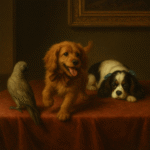
In 1926, Roswell Eldridge offered a cash prize of £25 at Crufts for the best “old-type toy spaniel”—a small dog with a longer muzzle, like the charming spaniels often seen in historical paintings. A handful of dedicated breeders took up the challenge, working to recreate the traditional look that had all but disappeared from the show ring. Their efforts proved so successful that in 1945, The Kennel Club officially recognized the Cavalier King Charles Spaniel as a separate breed. Since then, Cavaliers have gone on to become by far the more popular of the two varieties, adored for their affectionate temperament and classic, gentle expression. You can read more about the differences between the Cavalier and the King Charles Spaniel here.
For a deeper dive into the breed’s recreation, we highly recommend Sue Newnes’ insightful article on the subject.